
Speedback
Speedback is a structured, short, and intentional session designed to help teams start giving feedback when it is not happening. It acts as temporary support to build confidence, trust, and comfort be

Speedback is a feedback technique inspired by the logic of speed dating. It creates short, time boxed conversations where people rotate and give each other direct feedback in a structured and safe way. The goal is not to perfect feedback, but to make it start happening.
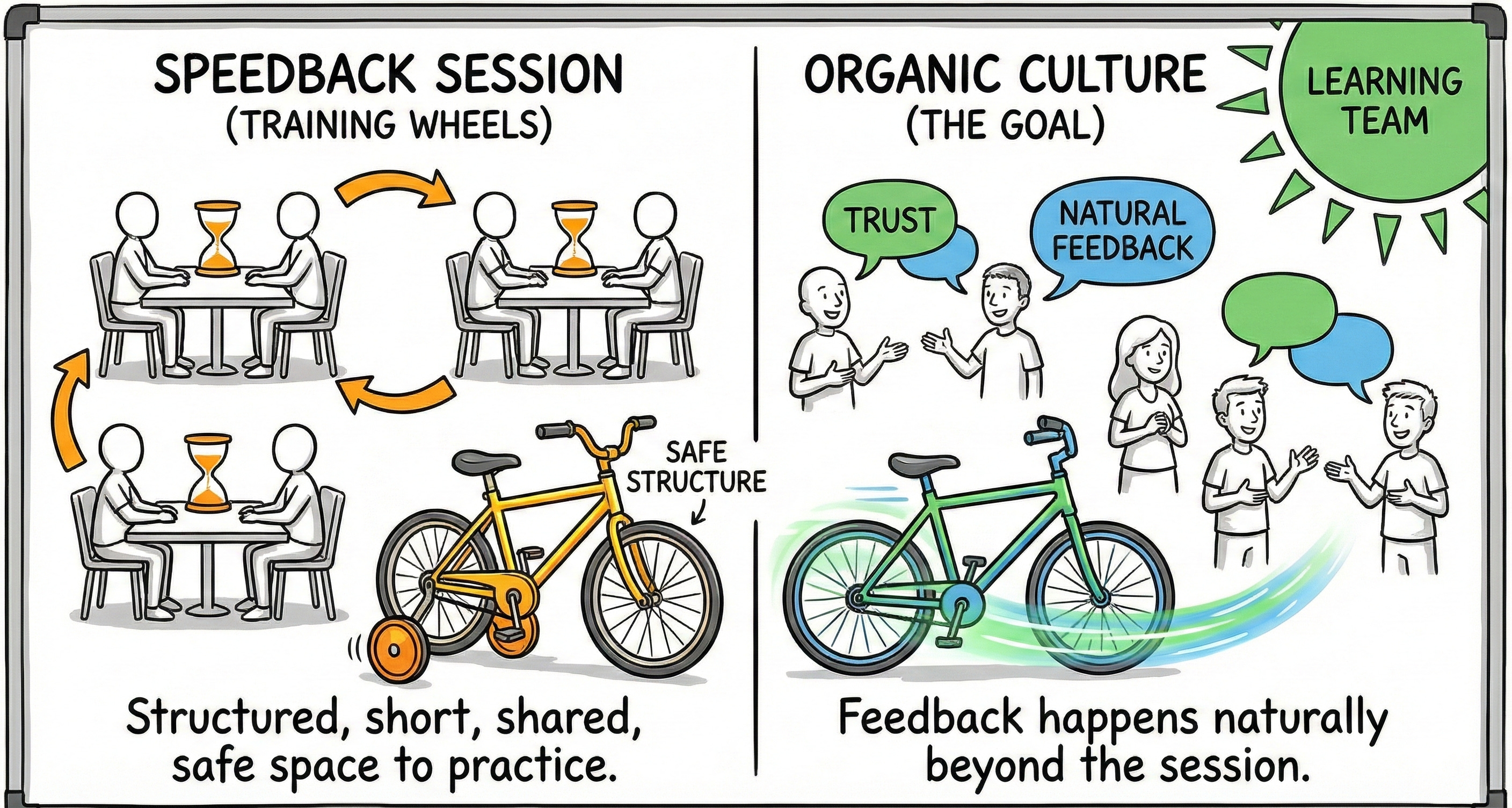
It is important to understand Speedback in the right context. This type of session is not designed to be a permanent ritual. It is better understood as the training wheels of a bicycle
Why Speedback exists
Speedback is usually introduced in teams where feedback is not working. Not because people do not care, but because feedback is not happening at all, or it feels uncomfortable, forced, or risky. Silence, avoidance, or overly formal reviews are common signals.
In these situations, asking a team to simply give more feedback rarely works. What is missing is a safe and intentional space to practice.
Speedback creates that space.
It lowers the barrier by making feedback short, expected, and shared by everyone at the same time. No one is singled out. No one has to initiate the conversation alone. The structure does the heavy lifting.
Setting the right expectations with the team
This message must be made explicit to the team.
Speedback is here to help us learn how to give and receive feedback. It is not here to stay forever.
Just like training wheels, it is a temporary support. Once the team gains confidence, trust, and fluency, the structure should slowly disappear.
If this is not communicated clearly, Speedback can feel artificial or forced. When it is framed correctly, it is understood as a learning tool, not a process imposed from above.
How to run a Speedback session
This section explains how to facilitate a Speedback session in a simple and practical way, keeping in mind that this is a learning exercise and not a permanent ritual.
Create the rotation
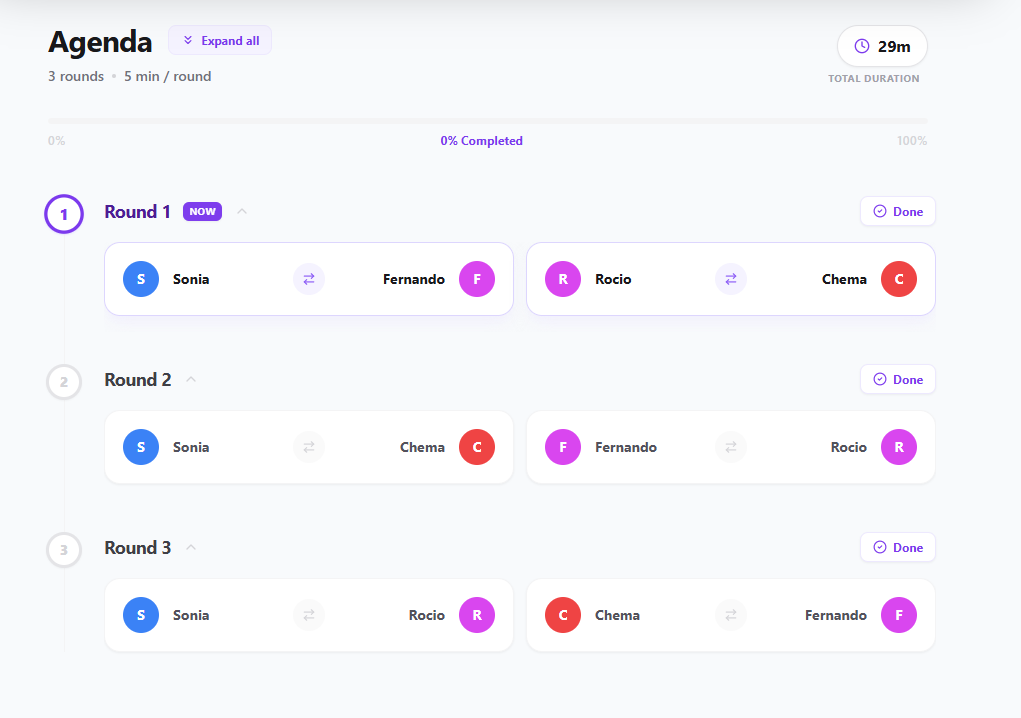
The first step is to design a rotation so that everyone is paired with everyone else, or with as many people as time allows.
Decide the duration of each round. Two to five minutes per person usually works well.
Pair people in twos and make sure each round has a clear start and end.
After each round, rotate pairs so participants meet a new person.
If the group is large and full rotation is not possible, aim for as much variety as you can rather than perfection.
The important part is that the structure removes the need for people to choose who to give feedback to. The rotation makes it automatic and fair.
For this point I’ve build this app https://speedback-rotation.netlify.app/
Prepare feedback in advance
Before the session, each participant should prepare feedback for their teammates.
This preparation is essential.
Everyone should think about positive aspects they genuinely appreciate in each colleague.
Everyone should also think about possible areas of improvement or suggestions that could help the other person grow.
Feedback should be concrete and based on real observations, not assumptions.
Because time is limited, people must be selective. This is not about listing everything they think. It is about prioritising what matters most.
Prioritise due to time constraints
Time pressure is part of the exercise, and it is intentional.
Participants should not bring long lists of feedback.
One or two strong positives and one clear improvement point are usually enough.
If something is not important enough to fit in the time slot, it probably is not a priority right now.
This constraint helps people learn an important feedback skill: choosing what is most valuable to say, not everything that could be said.
Run the rounds
During each round:
One person gives feedback while the other listens.
The listener focuses on understanding, not responding or defending.
When time is up, roles switch.
When both have finished, the rotation moves on.
Keep the rhythm steady and predictable. The safety of the session comes from its clarity and structure.
Close the session
At the end, allow a short reflection.
Invite participants to notice patterns rather than individual comments.
Encourage them to reflect on how it felt to give and receive feedback.
Reinforce the idea that this is practice for future, more natural feedback moments.
This closing helps connect the session with the broader goal of building a healthier feedback culture.
What comes after Speedback
The real success of Speedback is not how good the session feels. It is what happens after.
As the team becomes more comfortable, feedback should start appearing in other moments. For example:
After facilitating a workshop or a retrospective
After a pair programming session, once the pair feels safe reflecting together
In small, informal conversations close to the moment where the work happened
When feedback after pair programming starts to gain traction, and the team feels comfortable giving each other direct and timely input, Speedback has done its job.
At that point, the training wheels can come off.
The real goal
Speedback is not the goal. A team that talks openly, gives feedback naturally, and learns continuously is the goal.
Speedback is simply one way to help teams get there when they are not there yet.