
How Objects Relate: A Practical Taxonomy for Object-Oriented Design
The problem is not the vocabulary. The problem is using one flat vocabulary for several different kinds of design decisions

Most explanations mix runtime links, type hierarchies, and design patterns into one blurry list. This article untangles them, shows where each relationship belongs, and explains the differences with real code and UML diagrams.
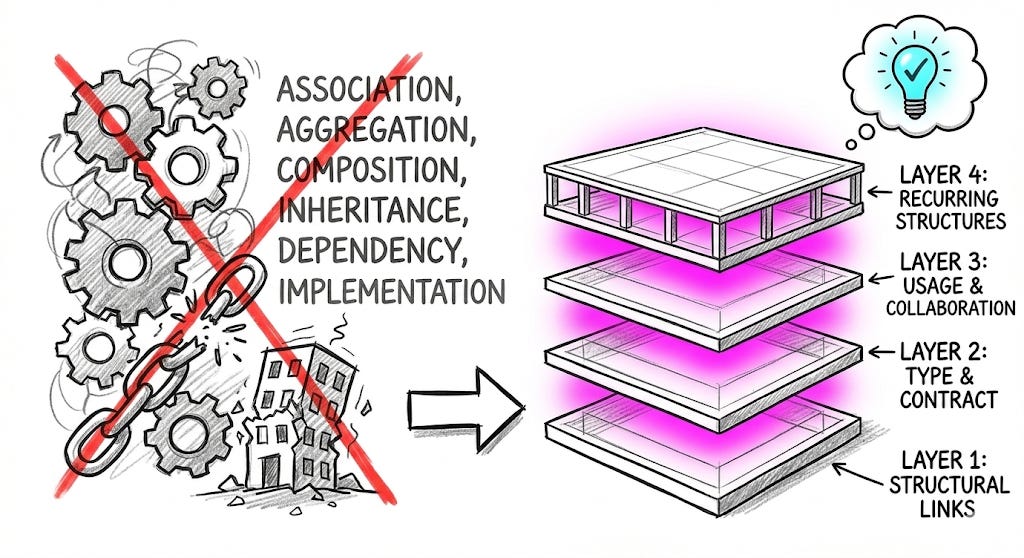
TL;DR
If you learned object relationships as a flat list like this:
Association
Dependency
Aggregation
Composition
Inheritance
Implementation
you learned something useful, but also something incomplete.
Those terms do not all answer the same question.
A better mental model is layered:
Structural links between objects
Association, navigability, multiplicity, qualified association, association class, self-association, aggregation, compositionType and contract relations
Generalization, subtyping, subclassing, interface realization, classificationUsage and collaboration relations
Dependency, visibility, delegation, collaborates-withRecurring design structures
Strategy, Decorator, Proxy, Observer, Composite
That layered view fits the topic far better because some relationships describe who is linked, some describe what kind of thing something is, some describe who needs whom to work, and some are larger recurring arrangements built from the earlier ones.
Index
Why the usual list never quite works
The layered taxonomy
A quick UML notation decoder
Layer 1: structural links between objects
Layer 2: type and contract relations
Layer 3: usage and collaboration relations
Layer 4: recurring design structures
The confusion that wastes the most time: composition vs composition over inheritance
A practical decision guide
Conclusion
References
Why the usual list never quite works
Look at these three examples:
An
OrdercontainsOrderLineitemsA
CheckoutServicedelegates to aPaymentGatewayA
CardPaymentis aPaymentMethod
All three are “object relationships” in a very broad sense.
But they are not the same kind of relationship.
One is about whole-part structure.
One is about collaboration.
One is about specialization and substitutability.
That is the real source of the confusion.
When these all get taught as one flat list, the words become slippery. Developers can repeat the definitions, but they still hesitate when they look at real code because they are answering different questions with the same mental drawer. The modelling literature separates structural links, type relations, and collaboration concerns much more carefully than most classroom cheat sheets do.
So the unlock for this whole topic is simple:
Not all object relationships are relationships of the same kind.
Once you accept that, the fog starts to lift.
The layered taxonomy
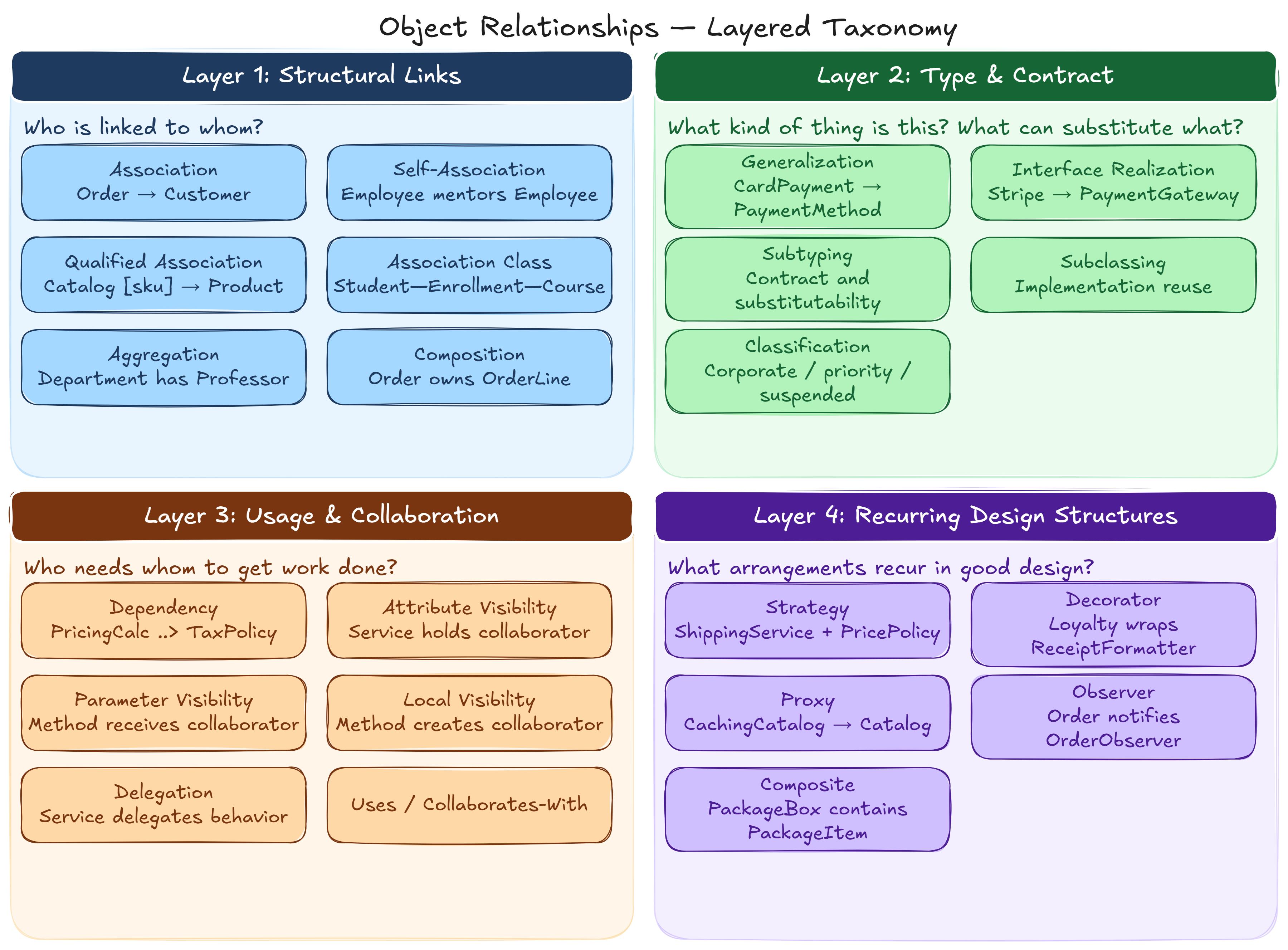
Here is the map we will use.

Each layer answers a different question:
Structural links ask: who is related to whom?
Type and contract relations ask: what kind of thing is this, and what can stand in for what?
Usage and collaboration relations ask: who needs whom to get work done?
Recurring design structures ask: what larger arrangements show up again and again in good designs?
This is the most useful mental model in the whole article. It turns a memorization problem into a judgment problem.
A quick UML notation decoder
Before going deeper, it helps to know what the main arrows and markers are trying to say.
Association: solid line. A stable structural relation.
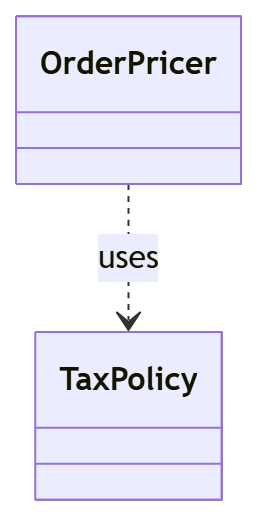
Dependency: dashed arrow. Temporary use or reliance.
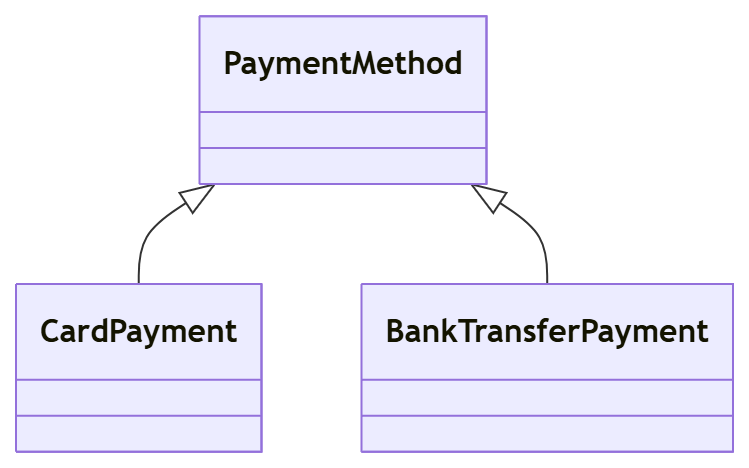
Generalization / inheritance: solid line with hollow triangle toward the more general type.
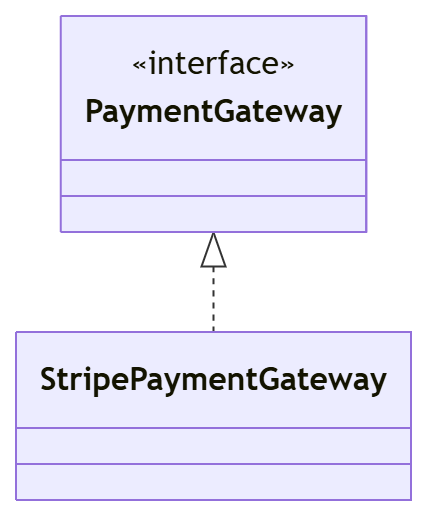
Interface realization: dashed line with hollow triangle toward the interface.
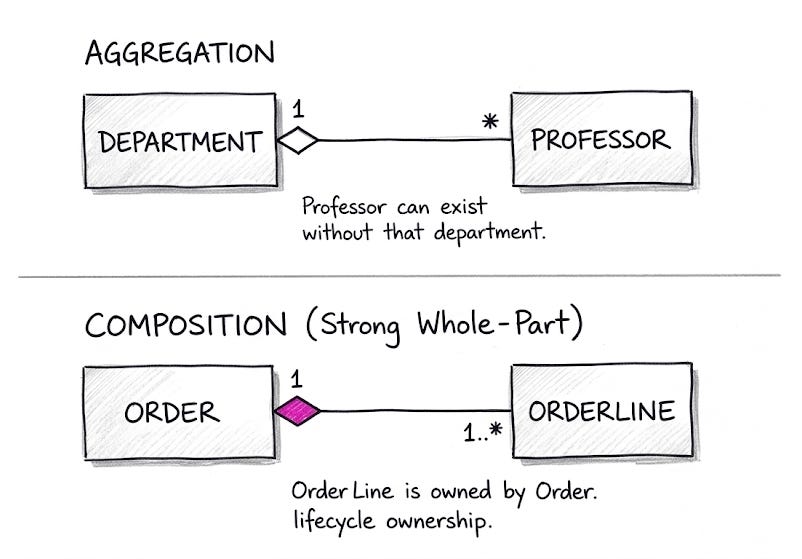
Aggregation: hollow diamond at the whole side.
Composition: filled diamond at the whole side.
Multiplicity: labels like
1,0..1,*,1..*.Qualified association: a key such as
[sku]is shown at the association end.Association class: the relationship itself is promoted to a class with its own data.
A compact picture helps:
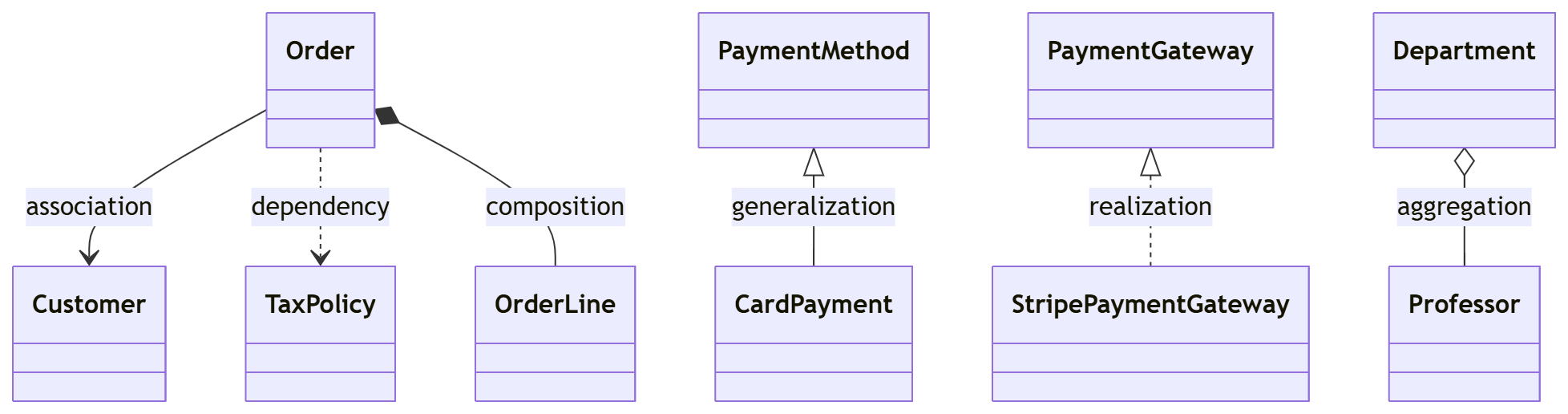
UML is not trying to decorate boxes with different arrows. It is trying to encode different kinds of meaning.
1. Layer 1: Structural links between objects
This is the most intuitive layer.
It answers the most natural question:
Who is linked to whom?
1.1 Association
An association is a stable semantic link between objects.
In plain English:
One object knows about, refers to, or is related to another in a way that is part of the object model.
A simple example:
an
Orderis placed by aCustomer
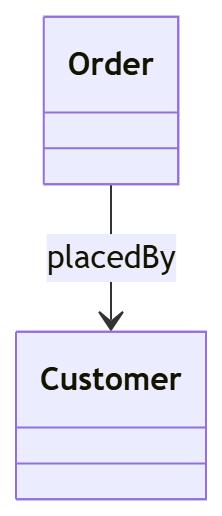
data class CustomerId(val value: String)
data class OrderId(val value: String)

class Customer(
    val id: CustomerId,
    val fullName: String
)

class Order(
    val id: OrderId,
    val placedBy: Customer
)
Why this is association:
The link is part of the structure of
OrderThe relationship is stable enough to live in the model
You can ask an order who placed it
The important point is not “there is contact between two objects.” The important point is that the relationship belongs to the structure of the model. That is what makes this different from a temporary dependency.
1.2 Navigability and multiplicity
Once you have an association, two more questions matter:
Can one side navigate to the other?
How many instances can participate?
These sound small, but they change the meaning of the model.
Unidirectional association
Order knows its Customer, but Customer does not expose orders directly.
data class CustomerId(val value: String)
data class OrderId(val value: String)

class Order(
    val id: OrderId,
    val placedBy: Customer
)
Bidirectional association
Now Customer also tracks its orders.
data class CustomerId(val value: String)

class Customer(
    val id: CustomerId,
    val fullName: String
) {
    private val orders = mutableListOf<Order>()

    fun addOrder(order: Order) {
        orders += order
    }

    fun orders(): List<Order> = orders.toList()
}
This is not about ownership.
It is about traversability.
And multiplicity matters too:
One customer may place many orders
Each order usually has one customer
Association tells you that a link exists. Navigability tells you who can follow it. Multiplicity tells you how many related instances there may be. Keeping those separate makes diagrams and code much easier to read.
Association tells you that a link exists. Navigability tells you who can follow it. Multiplicity tells you how many links there may be.
1.3 Self-association
A class can be associated with itself.
That sounds advanced, but it is ordinary.
A simple example:
An employee mentors another employee
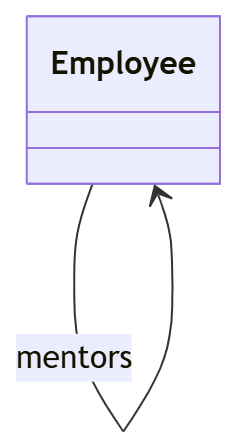
data class EmployeeId(val value: String)

class Employee(
    val id: EmployeeId,
    val fullName: String
) {
    private val mentees = mutableListOf<Employee>()

    fun mentor(mentee: Employee) {
        mentees += mentee
    }

    fun mentees(): List<Employee> = mentees.toList()
}
This is still association.
It is not inheritance.
That matters because the same class appears on both ends, but the question is still “who relates to whom?”, not “what kind of thing is this?”.
1.4 Qualified association
A qualified association is a relationship accessed through a key.
In software terms, the easiest way to picture it is this:
one object has access to a larger related set, but reaches a specific related object by using a qualifier such as an identifier.
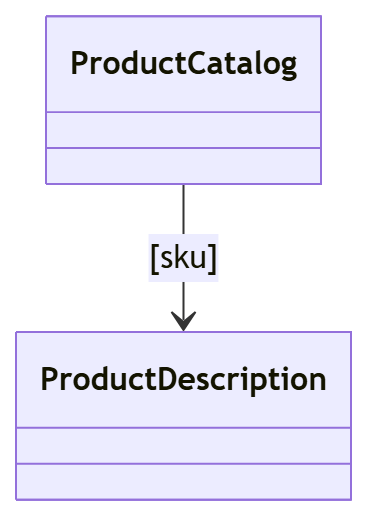
A clean example is a product catalog looking up product descriptions by SKU.
class ProductDescription(
    val sku: String,
    val name: String
)

class ProductCatalog(
    products: List<ProductDescription>
) {
    private val productsBySku = products.associateBy { it.sku }

    fun findBySku(sku: String): ProductDescription =
        productsBySku[sku] ?: error("Unknown SKU: $sku")
}
Why this matters:
It is not just “the catalog has many products”
The key is part of how the relationship is understood
It turns lookup into part of the model rather than leaving it as a hidden implementation detail
A useful side effect of qualification is that it often reduces multiplicity at the target end, because the key usually selects one object from a larger set.
1.5 Association class
Sometimes the relationship itself has meaningful data.
That is the moment a plain association stops being enough.
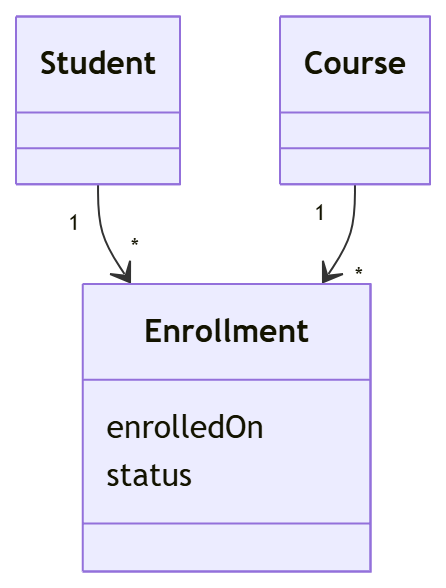
A classic example:
A student is enrolled in a course
But the enrollment has its own data: date, status, grade
data class StudentId(val value: String)
data class CourseId(val value: String)

class Student(
    val id: StudentId,
    val fullName: String
)

class Course(
    val id: CourseId,
    val title: String
)

class Enrollment(
    val student: Student,
    val course: Course,
    val enrolledOn: String,
    val status: String
)
Why this is not just a many-to-many association:
The relationship now has its own information
The relationship becomes a concept worth naming
The model becomes clearer once the link is promoted to a first-class citizen
Many messy many-to-many models are really unnamed association classes. That is one of the most useful modelling upgrades developers learn once they stop treating associations as only lines between boxes.
Many messy many-to-many designs are really unnamed association classes.
1.6 Aggregation
I want to be very explicit here.
I am keeping aggregation brief and precise on purpose.
Not because it does not exist.
Not because you will never see it.
But because it is one of the least useful distinctions in the standard list.
A practical definition is this:
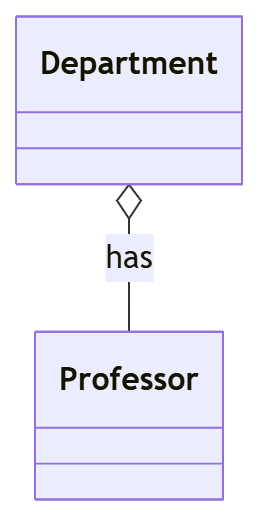
aggregation is a weak whole-part relation where the part can exist independently of the whole
A small example:
A
DepartmenthasProfessorobjectsA professor can exist without that department
data class ProfessorId(val value: String)

class Professor(
    val id: ProfessorId,
    val fullName: String
)

class Department(
    val name: String
) {
    private val professors = mutableListOf<Professor>()

    fun addProfessor(professor: Professor) {
        professors += professor
    }

    fun professors(): List<Professor> = professors.toList()
}
Why I am not giving aggregation more space:
It is intentionally weak
It often says little that plain association does not already say
It is much less actionable than composition in real modelling work
That is why aggregation deserves recognition, but not obsession. If association already says enough, use association. If lifecycle ownership matters, use composition.
If association already says enough, use association. If lifecycle ownership matters, use composition.
1.7 Composition
Composition is the strong whole-part relation.
This one matters much more.
The practical test is simple:
The part belongs to one whole at a time
The part is not conceptually free-floating
The whole is responsible for the part’s lifecycle
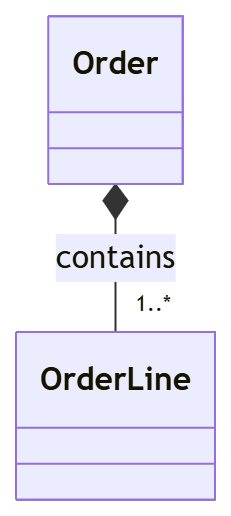
A very good example is Order and OrderLine.
class OrderLine(
    val product: ProductDescription,
    val quantity: Int
)

class Order(
    val id: OrderId
) {
    private val lines = mutableListOf<OrderLine>()

    fun addLine(product: ProductDescription, quantity: Int) {
        lines += OrderLine(product, quantity)
    }

    fun lines(): List<OrderLine> = lines.toList()
}
Why this is composition:
An order line exists as part of an order
The order controls creation of its lines
Lifecycle ownership is the point of the relationship
Association says linked. Composition says owned as part of the whole. That is the real distinction worth remembering.
Association says linked. Composition says owned as part of the whole.
2. Layer 2: Type and contract relations
Now the question changes.
We are no longer asking:
Who is linked to whom?
We are asking:
What kind of thing is this?
What contract does it satisfy?
What may stand in for what?
That is where inheritance belongs.
2.1 Generalization and inheritance
A generalization says that one thing is a more specific kind of another.
A simple example:
sealed class PaymentMethod {
    abstract fun authorize(amountInCents: Int): PaymentAuthorization
}

class CardPayment(
    private val gateway: PaymentGateway
) : PaymentMethod() {
    override fun authorize(amountInCents: Int): PaymentAuthorization =
        gateway.authorize(amountInCents)
}

class BankTransferPayment : PaymentMethod() {
    override fun authorize(amountInCents: Int): PaymentAuthorization =
        PaymentAuthorization.approved()
}

class PaymentAuthorization private constructor(
    val approved: Boolean
) {
    companion object {
        fun approved(): PaymentAuthorization = PaymentAuthorization(true)
    }
}
Why this is different from association:
The question is not “what is linked?”
The question is “what kind of thing is this?”
CardPaymentis aPaymentMethod
This layer is about taxonomy, substitutability, and contract, not about runtime links between objects.
2.2 Subtyping vs subclassing
This is one of the most important distinctions in the whole article.
They are related, but not identical.
subtyping is about contract and substitutability
subclassing is about inheriting implementation structure
You can have subtyping without shared implementation inheritance.
interface ReceiptFormatter {
    fun format(order: Order): String
}

class PlainTextReceiptFormatter : ReceiptFormatter {
    override fun format(order: Order): String =
        "Order ${order.id.value}"
}

class HtmlReceiptFormatter : ReceiptFormatter {
    override fun format(order: Order): String =
        "<strong>Order ${order.id.value}</strong>"
}
Both classes satisfy the same contract.
Neither inherits implementation from a base class.
That difference matters because many bad hierarchies come from confusing reuse with meaning.
A subtype promises. A subclass reuses. Sometimes one does both. They are still not the same idea. And when you confuse them, you start inheriting because code is nearby instead of inheriting because meaning and substitutability are truly there.
A subtype promises. A subclass reuses. Sometimes one does both. They are still not the same idea.
2.3 Interface realization
When a class satisfies an interface contract, UML calls that interface realization.
That is a better phrase than the loose classroom word “implementation” because it tells you what matters most: the class is realizing a contract.
interface PaymentGateway {
    fun authorize(amountInCents: Int): PaymentAuthorization
}

class StripePaymentGateway : PaymentGateway {
    override fun authorize(amountInCents: Int): PaymentAuthorization =
        PaymentAuthorization.approved()
}
Why this is different from inheritance:
No shared base implementation is required
The focus is contract conformance
It belongs to the type-and-contract layer, not the structural link layer
This becomes especially useful when you build systems around delegation, substitution, and dependency inversion instead of rigid hierarchies.
2.4 Classification is richer than one inheritance tree
One of the easiest traps in object modelling is treating every domain distinction as a subclassing problem.
But classification is richer than that.
A customer might be:
Corporate
Priority
Suspended
Credit-approved
If you try to force all of those into one inheritance tree, you quickly create either nonsense or class explosion.
Real domains often contain several independent classification dimensions, and inheritance trees are frequently a poor fit for that. This becomes even clearer when you consider multiple classification and dynamic classification, both of which show that type can be more fluid and more multi-dimensional than mainstream inheritance trees suggest.
That matters because it teaches a deeper lesson:
sometimes the right answer is not “build a bigger hierarchy.”
Sometimes the right answer is “this distinction belongs to state, role, policy, or collaboration instead.”
3. Layer 3: Usage and collaboration relations
Now the question changes again.
We are no longer asking who is linked or what kind of thing something is.
We are asking:
Who needs whom to do work?
How does one object gain access to another?
When is the relationship structural, and when is it just operational?
3.1 Dependency
A dependency is a weaker relation than association.
A simple rule of thumb:
if one object only needs another object temporarily in order to do some work, you are usually looking at a dependency rather than a structural association.
interface TaxPolicy {
    fun calculateTax(netAmountInCents: Int): Int
}

class OrderPricer {
    fun calculateTotal(netAmountInCents: Int, taxPolicy: TaxPolicy): Int {
        val tax = taxPolicy.calculateTax(netAmountInCents)
        return netAmountInCents + tax
    }
}
Why this is dependency:
The relation is operational
The pricer does not need to keep the policy as part of its identity
The other object is needed to perform an action, not define structure
Association tends to live in the object. Dependency tends to live in the action.
Association tends to live in the object. Dependency tends to live in the action.
3.2 Visibility: how collaboration becomes possible
In code, collaboration does not happen by magic.
One object needs some path to another.
That is where visibility matters.
A practical set of forms is:
Attribute visibility
Parameter visibility
Local visibility
Global visibility
Attribute visibility
The object keeps the collaborator as state.
class CheckoutService(
    private val paymentGateway: PaymentGateway
) {
    fun checkout(amountInCents: Int): PaymentAuthorization =
        paymentGateway.authorize(amountInCents)
}
Parameter visibility
The collaborator is passed in only for the current call.
class OrderPricer {
    fun calculateTotal(netAmountInCents: Int, taxPolicy: TaxPolicy): Int =
        netAmountInCents + taxPolicy.calculateTax(netAmountInCents)
}
Local visibility
The collaborator is created or captured inside the method.
class ReceiptService {
    fun buildReceipt(order: Order): String {
        val formatter = PlainTextReceiptFormatter()
        return formatter.format(order)
    }
}
Global visibility
The collaborator is globally reachable.
This exists, but it is usually the least interesting and often the least desirable form in object design.
Why this matters:
visibility is not exactly a domain relationship.
It is the access path that makes collaboration possible in the design.
That is subtle, but very practical.
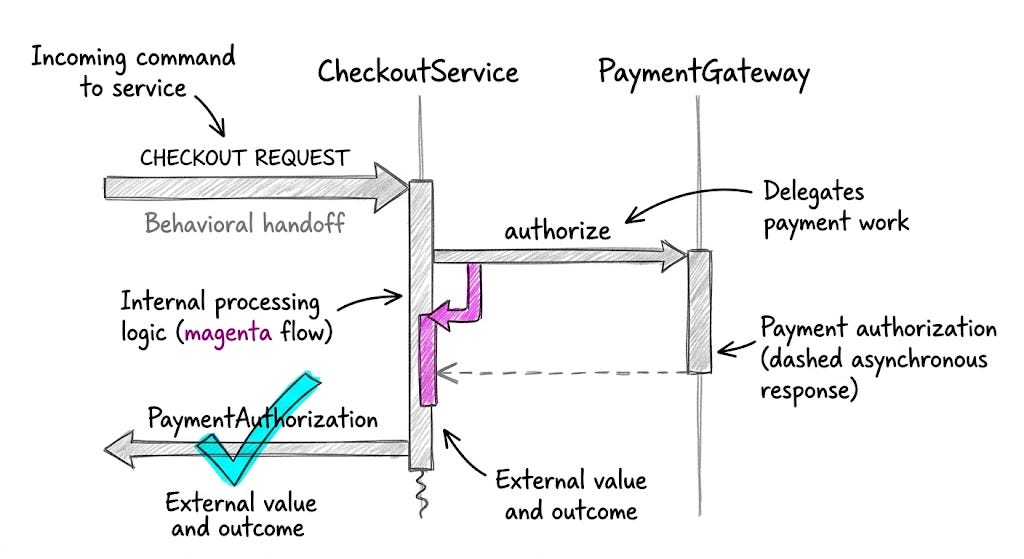
3.3 Delegation
Delegation is one of the most important object relationships in day-to-day design.
One object receives a request, then hands responsibility to another object that is better suited to do the work.
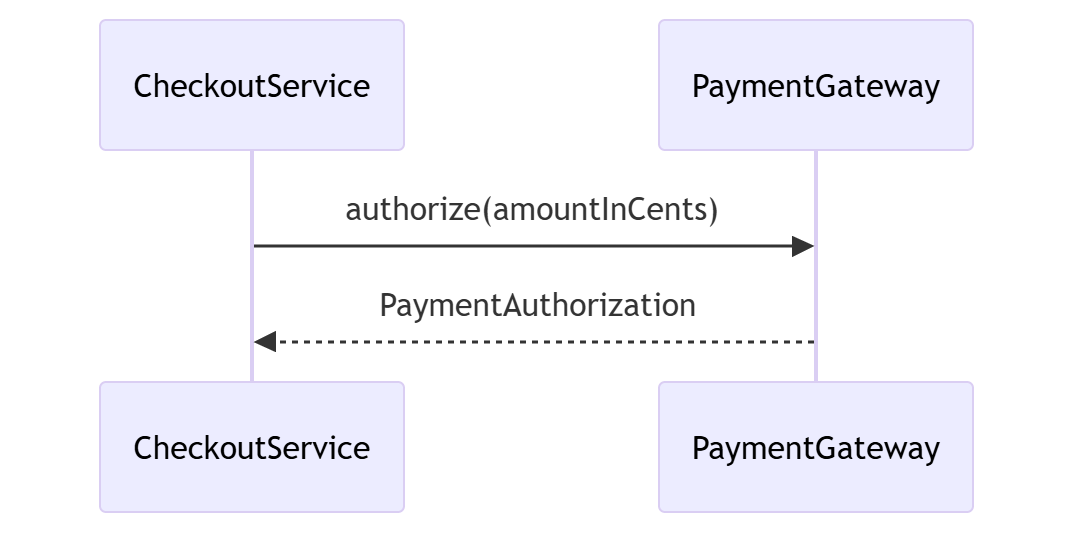
class CheckoutService(
    private val paymentGateway: PaymentGateway
) {
    fun checkout(amountInCents: Int): PaymentAuthorization =
        paymentGateway.authorize(amountInCents)
}
Why this matters:
Delegation is not inheritance
Delegation is not UML composition
Delegation is about behavioral handoff
It is often the quiet answer to problems that people first try to solve with inheritance. If a class really just needs another object to perform a behavior, delegation is usually clearer than pretending one object is a more specific kind of the other.
Delegation is often the quiet answer to problems that people first try to solve with inheritance.
3.4 Uses vs collaborates-with
This distinction is easy to miss, but very valuable.
Not every “uses” relation deserves the same conceptual weight.
Sometimes one object merely uses another as a tool.
Sometimes two objects genuinely collaborate to fulfill behavior.
That difference matters because it changes how central the relationship is to the design.
A logger may be merely used.
A checkout service and payment gateway collaborate.
A pricing service and discount policy collaborate.
That is a useful mental move even if you never draw it on a UML diagram. It pushes you to ask:
is this other object just nearby, or is it part of how this object fulfills its responsibility? Some object-oriented traditions treat collaborates-with as one of the few relations that says something intrinsic about an object’s role, which is one reason this distinction is so valuable in practice.
4. Layer 4: Recurring design structures
Now we reach the level where many taxonomies become messy.
Patterns.
Here is the clean way to place them:
patterns are recurring arrangements built from simpler relations, not primitive peer categories beside association or inheritance
That keeps the taxonomy from exploding.
It also keeps the article honest. When you say “Strategy,” “Decorator,” or “Observer,” you are usually naming a larger arrangement of contracts, links, delegation, and lifecycle decisions, not a new primitive relation.
4.1 Strategy
Problem: vary behavior without changing the context.
Builds on: interface realization, dependency, delegation.
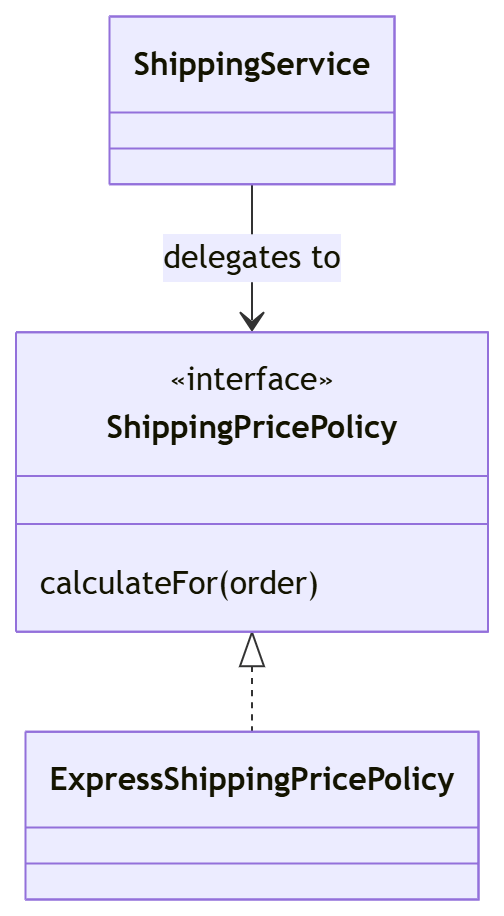
interface ShippingPricePolicy {
    fun calculateFor(order: Order): Int
}

class ExpressShippingPricePolicy : ShippingPricePolicy {
    override fun calculateFor(order: Order): Int = 1499
}

class ShippingService(
    private val pricingPolicy: ShippingPricePolicy
) {
    fun shippingCostFor(order: Order): Int =
        pricingPolicy.calculateFor(order)
}
What matters here is that the context does not hard-code one behavior. It depends on a contract and hands the work to whichever strategy it receives. That is why Strategy is one of the clearest examples of composition over inheritance in practice.
4.2 Decorator
Problem: add responsibilities without changing the outward contract.
Builds on: interface realization, composition, delegation.
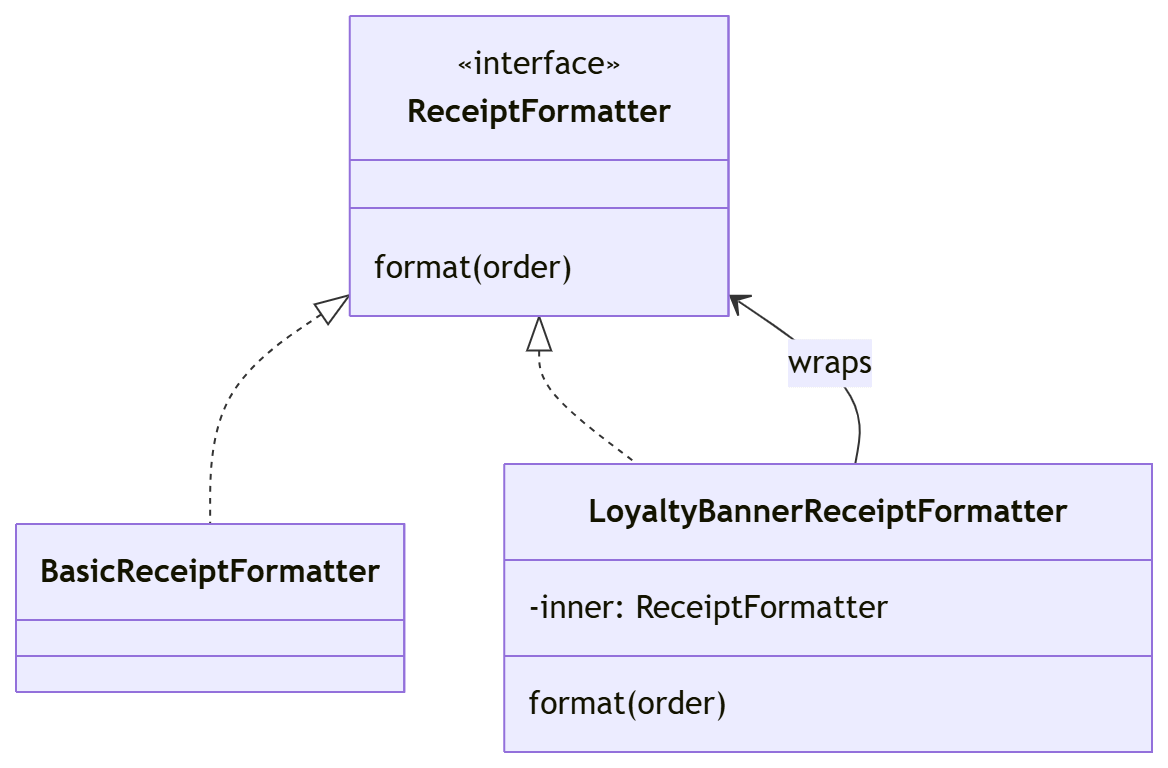
interface ReceiptFormatter {
    fun format(order: Order): String
}

class BasicReceiptFormatter : ReceiptFormatter {
    override fun format(order: Order): String =
        "Order ${order.id.value}"
}

class LoyaltyBannerReceiptFormatter(
    private val inner: ReceiptFormatter
) : ReceiptFormatter {
    override fun format(order: Order): String =
        "Thanks for being a loyal customer\n" + inner.format(order)
}
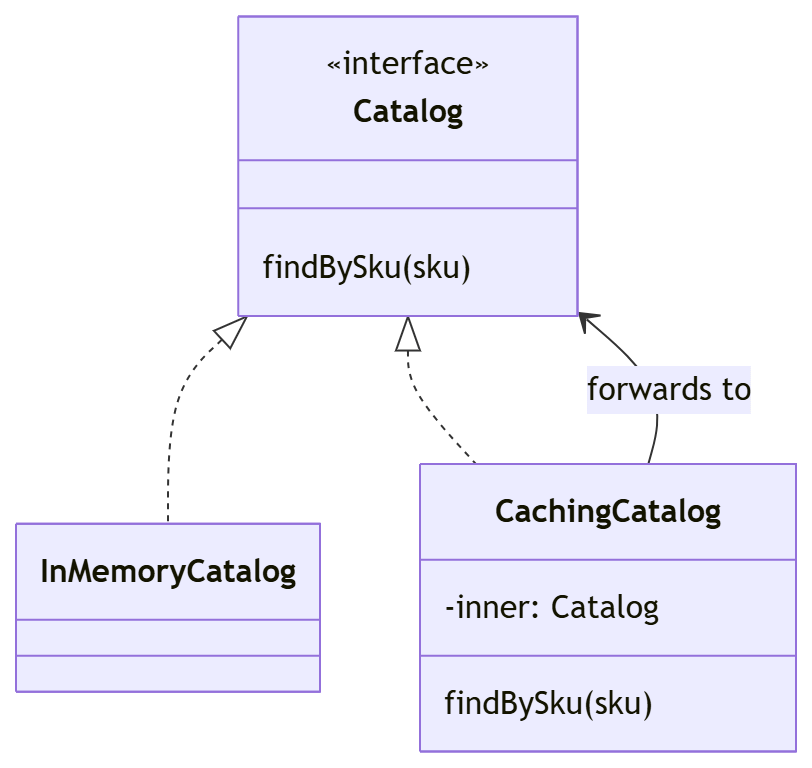
The decorator keeps the same outward contract, stores a wrapped component through that contract, and delegates work to it while adding behavior around the call. Structurally it resembles Proxy, but the intent is different: Decorator enhances behavior. Proxy controls access.
4.3 Proxy
Problem: control access to a real subject or stand in for it.
Builds on: interface realization, association, delegation.
interface Catalog {
    fun findBySku(sku: String): ProductDescription
}

class InMemoryCatalog(
    products: List<ProductDescription>
) : Catalog {
    private val productsBySku = products.associateBy { it.sku }

    override fun findBySku(sku: String): ProductDescription =
        productsBySku[sku] ?: error("Unknown SKU: $sku")
}

class CachingCatalog(
    private val inner: Catalog
) : Catalog {
    private val cache = mutableMapOf<String, ProductDescription>()

    override fun findBySku(sku: String): ProductDescription =
        cache.getOrPut(sku) { inner.findBySku(sku) }
}
Proxy and Decorator can look structurally similar, but their intent is different. Proxy stands in for the real subject and controls access to it. Decorator adds responsibilities while preserving the same base interface.
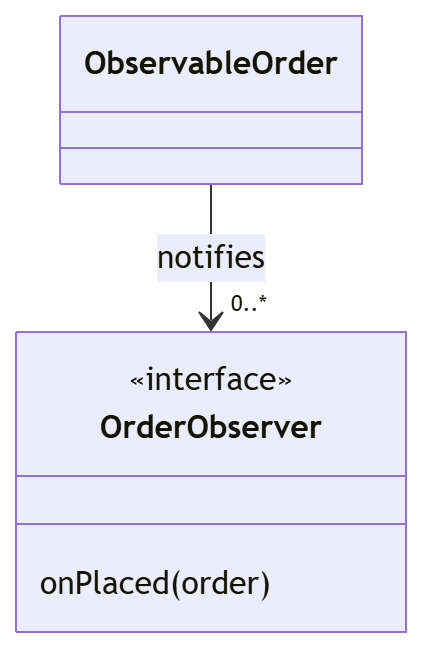
4.4 Observer
Problem: propagate a change or event to many dependents.
Builds on: association or dependency, notification collaboration, one-to-many propagation.
interface OrderObserver {
    fun onPlaced(order: Order)
}

class ObservableOrder(
    private val idValue: OrderId,
    private val customer: Customer
) {
    private val observers = mutableListOf<OrderObserver>()

    fun subscribe(observer: OrderObserver) {
        observers += observer
    }

    fun place() {
        val order = Order(idValue, customer)
        observers.forEach { it.onPlaced(order) }
    }
}
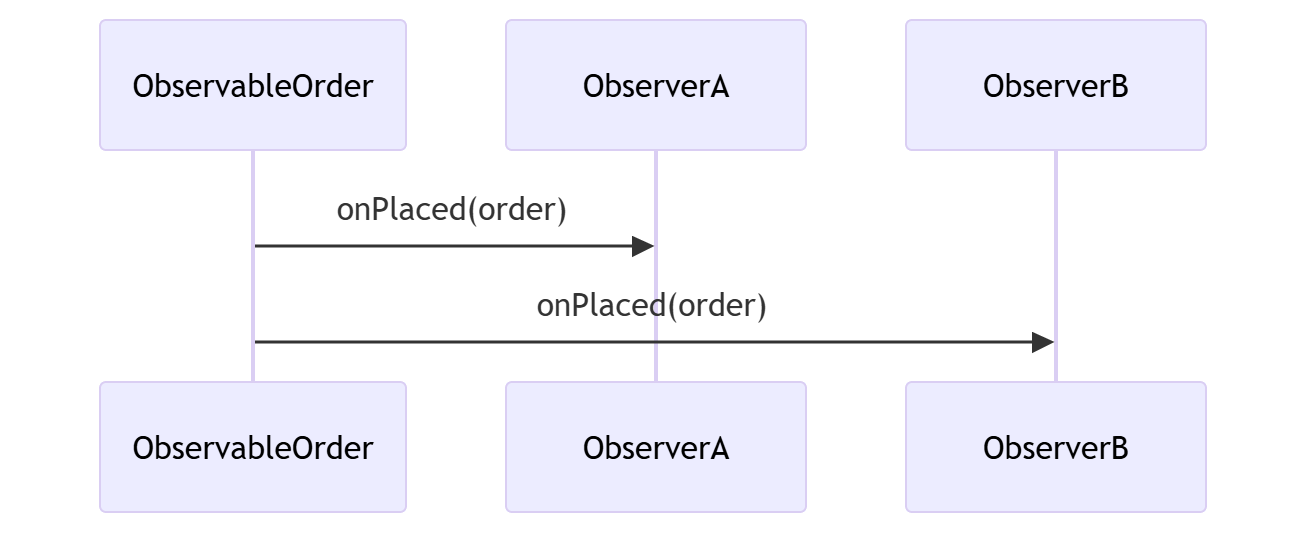
Observer is easier to understand when you see both pieces:
The static structure: one subject, many observers
The dynamic flow: one event, many notifications
That is why a diagram helps here more than a paragraph alone.
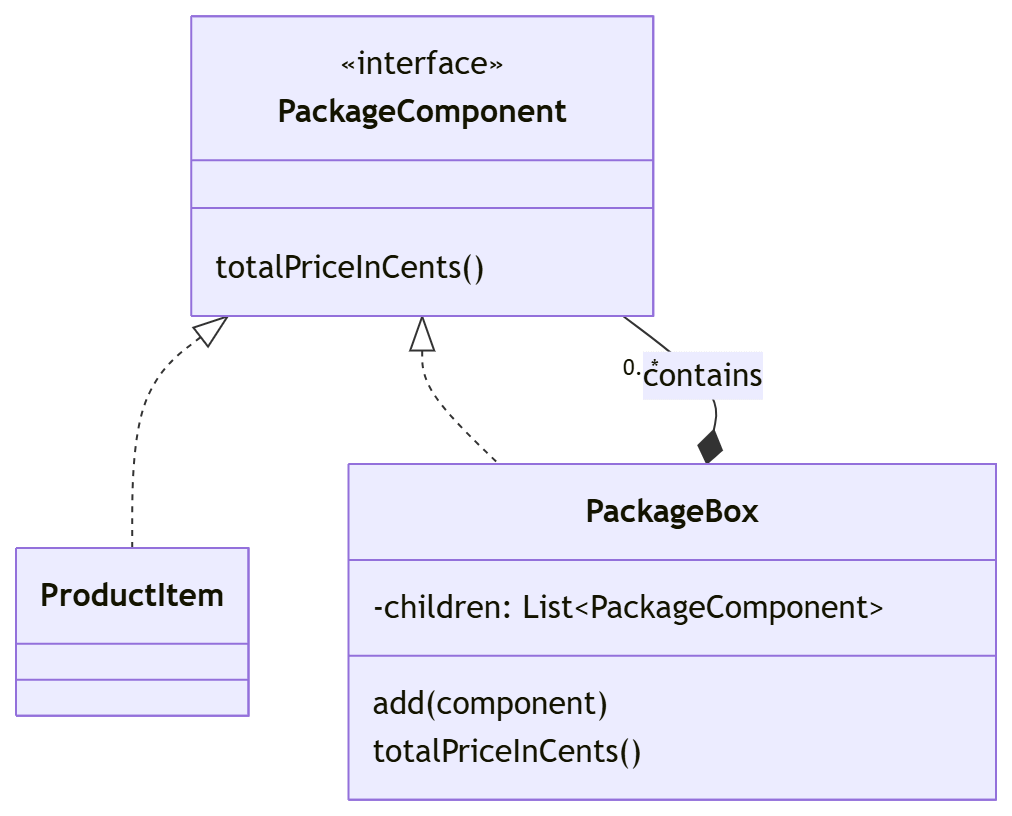
4.5 Composite
Problem: treat one object and a whole tree of objects uniformly.
Builds on: interface realization, recursive association, and often composition.
A familiar example is packaging:
A box can contain products
A box can also contain smaller boxes
Both can be treated through the same interface when you calculate total price
interface PackageComponent {
    fun totalPriceInCents(): Int
}

class ProductItem(
    private val priceInCents: Int
) : PackageComponent {
    override fun totalPriceInCents(): Int = priceInCents
}

class PackageBox : PackageComponent {
    private val children = mutableListOf<PackageComponent>()

    fun add(component: PackageComponent) {
        children += component
    }

    override fun totalPriceInCents(): Int =
        children.sumOf { it.totalPriceInCents() }
}
What matters here is the recursive structure:
Leaves and containers share one common interface
The container stores children through that same interface
The client can treat one object and a whole tree in the same way
This is also why Composite is easy to confuse with composition. Composite is a pattern that often uses composition. Composition is a relationship about ownership and lifecycle. They are related, but not the same thing.
Patterns are not missing relationship types. They are recurring structures built from simpler ones.
5. The confusion that wastes the most time: composition vs composition over inheritance
These are not the same thing.
They answer different questions.
And a lot of confusion disappears once you separate them.
5.1 UML composition
This is the relationship we covered earlier:
Strong whole-part
Lifecycle ownership
One whole responsible for its parts
Example:
Ordercomposed ofOrderLine
That is a structural modelling idea.
It tells you something about ownership, containment, and lifecycle.
5.2 Composition over inheritance
This is not a UML relation.
It is a design guideline.
It means:
Prefer assembling behavior from collaborating objects instead of subclassing just to reuse behavior.
interface DiscountPolicy {
    fun applyTo(totalInCents: Int): Int
}

class NoDiscountPolicy : DiscountPolicy {
    override fun applyTo(totalInCents: Int): Int = totalInCents
}

class SeasonalDiscountPolicy : DiscountPolicy {
    override fun applyTo(totalInCents: Int): Int = totalInCents - 1000
}

class PricingService(
    private val discountPolicy: DiscountPolicy
) {
    fun finalPrice(totalInCents: Int): Int =
        discountPolicy.applyTo(totalInCents)
}
Here the service is not a whole made of parts in the UML sense.
Instead, the design is assembling behavior through collaboration.
Same word root. Different question.
UML composition asks: who owns the part?
Composition over inheritance asks: how should behavior be assembled?
5.3 Why composition over inheritance is often the safer default
This is the part that usually gets skipped too quickly, and it is the part that gives the guideline its practical force.
Inheritance is not bad.
But it is very easy to reach for it too early because it feels tidy at first.
Two classes share some behavior.
So you extract a base class.
Now the duplication is gone and the hierarchy looks cleaner.
At that point, inheritance feels like a win.
The problems usually show up later.
A subclass cannot freely stop being what the parent says it is.
It cannot quietly narrow the parent contract just because that would be convenient.
If it overrides behavior, it is still expected to remain compatible with what callers already expect from the base type.
That is where the pressure starts.

The subclass is no longer just reusing code.
It is also carrying the meaning, assumptions, and constraints of the parent.
That creates a few common problems:
Subclasses become tightly coupled to superclasses
Internal details of the parent start leaking into child classes
Changes in the parent can ripple into several descendants
One inheritance tree is often forced to represent several variation dimensions at once
And that last point is where designs often become brittle.
Maybe one hierarchy started as a clean taxonomy.
Later it also needs to express discount rules.
Then output format.
Then delivery policy.
Then validation differences.
Now the hierarchy is doing too many jobs at once.
Composition helps because it keeps those decisions more local.
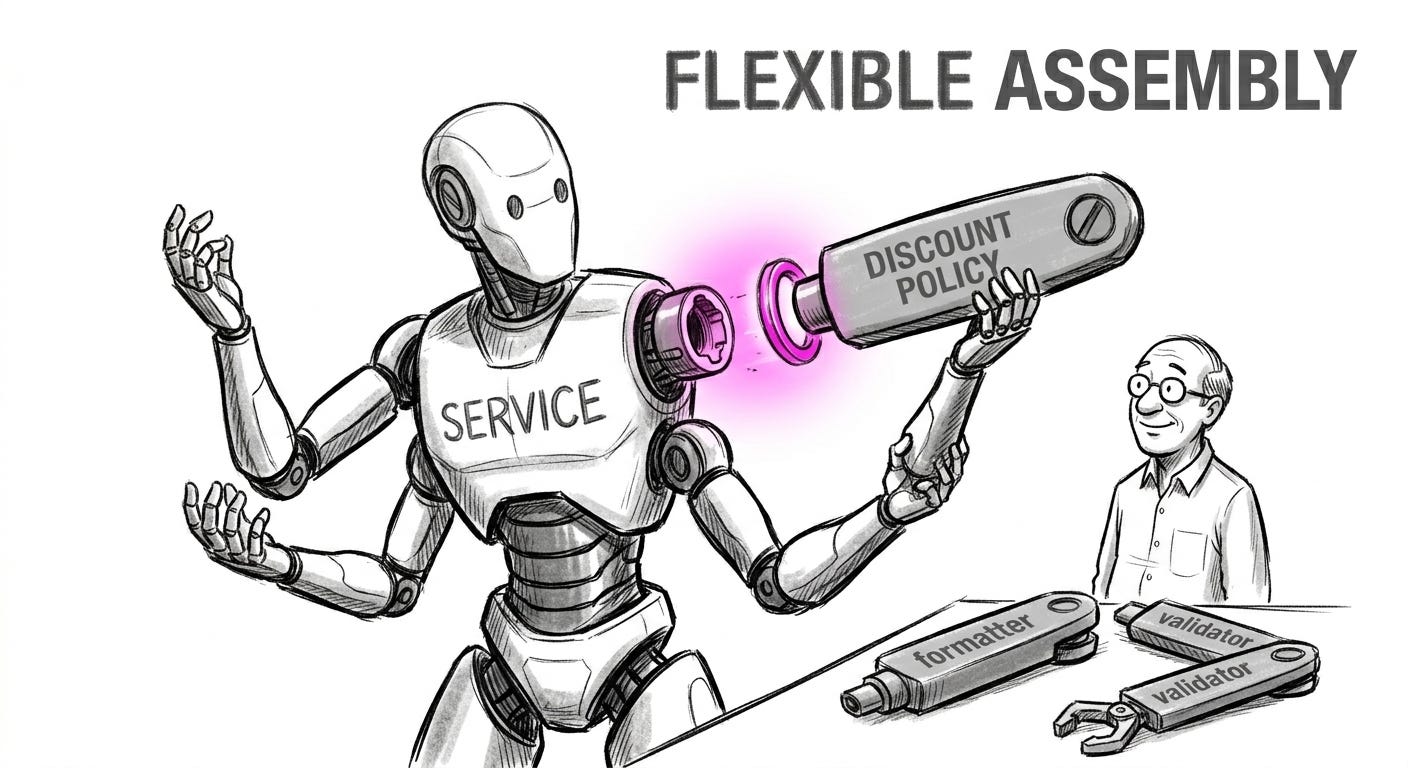
A service can delegate pricing to a pricing policy.
A formatter can wrap another formatter.
A checkout flow can collaborate with a payment gateway.
A class can satisfy a contract without inheriting implementation from a parent.
That usually gives you a flatter and more flexible design:
Behavior can vary independently
Responsibilities are easier to isolate
Changes stay more local
One variation does not automatically force a redesign of the whole hierarchy
Several dimensions of change do not immediately explode into subclass combinations
So the real takeaway is not:
“inheritance is wrong.”
It is:
Use inheritance when you truly have a stable kind-of relationship and safe substitutability. Use composition when what you really need is flexible behavior assembly. Composition over inheritance is recommended precisely because inheritance brings interface pressure, encapsulation leakage, tight coupling, and the risk of parallel hierarchy explosion when several variation dimensions are forced into one tree.
Another time I use inheritance is when I’m refactoring; sometimes it’s a useful intermediate step that will eventually be removed once the refactoring is complete, but it’s a step I take to start refactoring what I want. Examples of this include when you have to use legacy code techniques such as “Subclass and Override Method”.
6. A practical decision guide
When you are not sure which relationship you are looking at, do not start by memorizing notation.
Start by asking the right question.
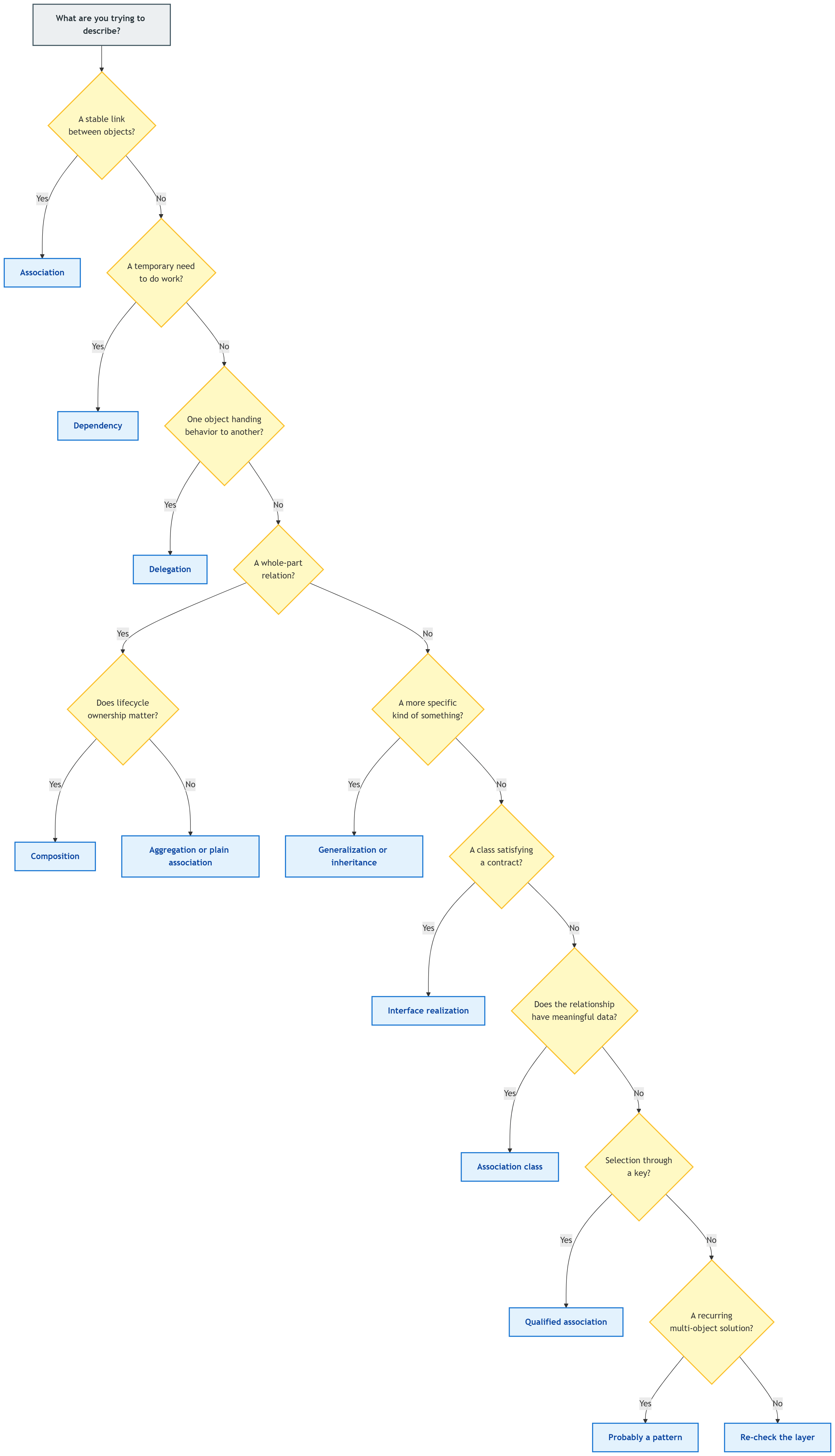
The goal is not to turn judgment into a flowchart. The goal is to prevent category mistakes.
Most mistakes here happen because people pick a label before they decide which layer they are working in.
7. Conclusion
Most confusion about object relationships is not caused by impossible definitions.
It is caused by flattening several different kinds of design decision into one list.
Once you separate the layers, the topic becomes much calmer:
structural links tell you who is related to whom
type and contract relations tell you what kind of thing something is and what it promises
usage and collaboration relations tell you who needs whom to get work done
recurring design structures tell you how simpler relations are repeatedly combined in good designs
That layered view does something important: it helps you choose the right question before you choose the label.
If you are describing a stable link, you are probably in the structural layer.
If you are describing kind-of meaning or contract conformance, you are in the type layer.
If you are describing temporary use or behavioral handoff, you are in the collaboration layer.
If you are describing a larger recurring arrangement such as Strategy, Decorator, Proxy, Observer, or Composite, you are no longer dealing with a primitive relation at all. You are looking at a design structure built from several simpler ones.
That is also why some distinctions deserve more weight than others.
Aggregation is worth recognizing, but rarely worth centering.
Composition matters because ownership and lifecycle matter.
Subtyping and subclassing must be kept separate because substitutability and implementation reuse are not the same decision.
And composition over inheritance matters because it reminds us that flexible behavior is often assembled more safely through contracts, delegation, and collaboration than through deep hierarchies.
In the end, the problem was never the words themselves.
The problem was using one flat vocabulary for several different kinds of meaning.
Once you stop doing that, object relationships stop feeling slippery. The arrows become easier to read. The code becomes easier to model. And the design decisions behind both become easier to explain.
The real skill is not memorizing the notation. The real skill is noticing which layer you are in.
References
This article is grounded mainly in these uploaded sources:
David West, Object Thinking
Especially useful for the distinction between intrinsic and situational relationships, and for the importance ofis-a-kind-ofandcollaborates-with.Martin Fowler, Analysis Patterns
Especially useful for association vs mapping, generalization, subtyping vs subclassing, multiple classification, and dynamic classification.Craig Larman, Applying UML and Patterns
Especially useful for qualified association, association class, visibility, aggregation, composition, and UML notation for interface realization.Alexander Shvets, Dive Into Design Patterns
Useful for the practical framing of object relations, the rationale behind favoring composition over inheritance, and the structural understanding of Decorator, Proxy, Strategy, Observer, and Composite.
Excellent article, Emmanuel. Layer 4 is the one that resonates the most: treating patterns as recurring arrangements built from simpler relations, rather than as primitive categories, avoids one of the most common traps when teaching them, which is presenting them as a flat catalog at the same level as association or inheritance.
I'd add a practical nuance: many patterns that look structurally identical (Decorator, Proxy, even Composite) are distinguished only by intent, not by form. This reinforces your point that the layered taxonomy is more useful than the flat list, because it forces you to separate "what links what" from "why it's composed this way". Without that separation, we end up arguing whether something "is a Decorator or a Proxy" when the real question is what responsibility the wrapper is taking on.
Thanks for writing it, I'll be reusing it as a reference when reviewing designs with the team.